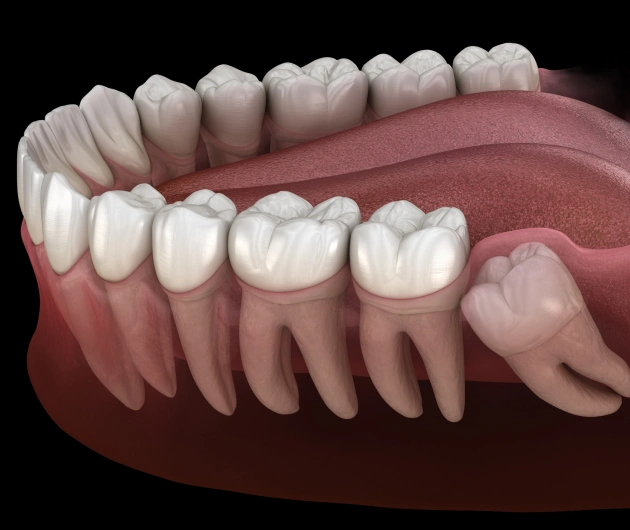
Prevent Problems with Wisdom Teeth
You may need a wisdom teeth extraction at some point in your life. It is rare for a person to have enough room for all of their wisdom teeth, and as a result, they tend to grow in impacted. This can be uncomfortable, pushing your other teeth forward and creating a space for food to become trapped; it can also increase your risk of infection and decay. This is why we often recommend that our patients have their wisdom teeth removed. When you schedule an appointment with Escondido Family Dental Care & Specialty Center, we can examine you, take X-rays, and let you know if and when you should schedule an extraction procedure. You can reach us by calling (760)-273-0531.
What is an Extraction?
This is a dental procedure where your wisdom teeth are removed. How they are removed will be based on their current location and whether or not they are impacted.
What is the Procedure Like?
First, you will receive anesthesia in order to numb the area being worked on. Some dentists and oral surgeons may also offer nitrous oxide to help you relax or put you to sleep so you do not remember anything about the actual procedure.
If your wisdom teeth have grown in straight, removing them is fairly easy. In this case, you would visit a dentist to have them pulled out using dental tools. Most likely, no surgery would be required. However, if your teeth are impacted, the procedure requires oral surgery. In order to access the actual tooth, the gum tissue covering it will need to be cut open. After numbing the area, a flap will be created in the gum tissue. This allows the dentist or oral surgeon to view the tooth. If muscle or bone is covering it, that will also need to be cut away to provide clear access to the actual tooth. At this point, your dentist may be able to grab the tooth and simply lift it out of the socket. If, however, it does not budge when being wiggled, then the actual tooth will need to be broken into several pieces that can be extracted individually.
Once the tooth has been entirely removed, the area will need to be carefully cleaned. Afterward, the flap of gum tissue can lay flat and be sutured back in place. In order to stop the bleeding, the dentist will place gauze on the area.
What Are the Aftercare Steps Following Wisdom Teeth Extraction?
Immediately following a wisdom teeth extraction, you will remain at the dentist office until the effects of the anesthesia have worn off. During this time, you will be monitored to ensure that any bleeding has slowed and that the gauze is working sufficiently. So long as it is, you will be sent home to finish your recovery. Just make sure you have someone pick you up so you do not need to drive home on your own.
At Escondido Family Dental Care & Specialty Center, we tell patients who are planning for an extraction to prepare ahead of time. You will need to rest when you get home, so have your bed ready with plenty of pillows to prop up your head. Fill your nightstand with water bottles, additional gauze, ibuprofen, and some good books or movies. Plan on taking it easy for the next 48 hours. During that time, you may want to eat a lot of popsicles, ice cream, yogurt, warm soup, Jell-O, and other foods that are soft and do not require chewing. You will be too sore to try and eat anything else.
To help control the swelling, you should ice your face for 15 minutes at a time and take ibuprofen around the clock. This should be done for 24 to 48 hours. Afterward, you may still need some ibuprofen, but icing may no longer be necessary.
Gradually, you will be able to add in solid foods and begin to eat like normal. The key is to take it easy and not rush the process. Slowly add soft foods that are easy to chew and work your way up to dining at your favorite Escondido restaurant. It may take up to two weeks to be 100 percent back to normal, so during this time, be sure to avoid any nuts, chips, or foods that could crunch and scratch your gum tissue.
You will need to schedule a follow-up visit with the dentist who performed the procedure to ensure that you are healing properly. During this visit, you will get the sign off to return to normal eating habits.
How Long is Wisdom Teeth Extraction Recovery Time?
The first 48 hours are critical since this is when you may experience bleeding, pressure, and swelling. After this, it can take a week or two to recover fully. Your actual recovery time will be based on the procedure and whether or not your wisdom teeth extraction was completed with surgery.
Check out what others are saying about our wisdom teeth extraction services on
Yelp: Wisdom Teeth Extraction Escondido

How to Prevent an Infection After Removal?
As a dentist, we are always concerned about infections post-surgery. Whether you have a wisdom teeth extraction or need to have another tooth removed, there is always the risk that the area will become exposed to bacteria. To prevent this, you should rinse your mouth periodically with warm saltwater. Brushing your teeth is also important, even though you need to carefully avoid the surgical site. In some cases, an antibiotic mouth rinse may also be prescribed.
Is a Wisdom Teeth Extraction Really Necessary?
At Escondido Family Dental Care & Specialty Center, we understand that each of our patients is unique and so are their teeth. Whether or not you need to have your wisdom teeth removed by a dentist, will really depend on the size of your palate. If you have plenty of room for all of your teeth and your third molars, they can stay in place. There is no point in removing something that grows in straight and is healthy. However, any tooth that grows in impacted needs to be removed because it is posing a direct threat to your other teeth and roots in addition to being a target for infections. The best way to find out if your wisdom teeth should be removed is to call (760)-273-0531 and schedule an appointment with our Escondido dentist office. We can make a recommendation and answer any other questions you have about the procedure itself.
If you live in the Escondido area, call (760)-273-0531 to schedule your dental exam so that you can remain in good dental health or receive treatment for a current condition.
Questions Answered on This Page
Definition of Dental Terminology
Anesthesia
Anesthesia is a substance that medical professionals administer in various forms (gas, injection or pill) that helps patients not feel pain or sensations during surgical operations.
Asymptomatic Wisdom Teeth
Asymptomatic wisdom teeth are wisdom teeth that show no symptoms of irritation, inflammation or overcrowding the mouth that deem extraction.
Cosmetic Dentistry
Cosmetic dentistry is generally used to refer to any dental work that improves the appearance (though not necessarily the function) of a person’s teeth, gums and/or bite.
Cysts – Fluid Filled Sacs
Cysts are fluid-filled sacs that can also contain gas or puss and can occur anywhere on the body, even in or around the mouth/teeth.
Dental Checkup
A dental checkup is an appointment that involves cleaning the teeth, identifying any signs of infection and removing said signs of infection at least once every six months in the office.
Dental Prophylaxis
A dental prophylaxis is a professional and detailed cleaning that involves the removal of plaque, calculus and stains from the teeth.
Dentist
A dentist, also known as a dental surgeon, is a doctor who specializes in the diagnosis, prevention, and treatment of diseases and conditions of the oral cavity.
Dry Socket
A dry socket can occur after pulling a tooth out and seeing white bone in said socket. Other symptoms of dry socket include bad breath and an unpleasant taste in the mouth.
Oral Surgery
Oral surgery is a type of surgery that focuses on the mouth, jaw, gums or teeth. Oral surgery can repair, enhance or correct multiple issues in the mouth.
Pericoronitis
Pericoronitis refers to the inflammation of the soft tissue surrounding the crown of a partially-erupted tooth.
Preventive Dentistry
Preventive dentistry is the dentistry that focuses on maintaining oral health in order to prevent the spread of plaque, the formation of tartar and infections in the mouth.
Third Molars
The third molars are also known as the wisdom teeth and typically require removal in order to prevent pain and other issues in the mouth.
Vacuum Formed Mouthguard
A vacuum formed mouthguard involves customizing the mouthguard to match a mold of the individual patient’s teeth for a perfect fit.
Third Molars
The third molars are also known as the wisdom teeth and typically require removal in order to prevent pain and other issues in the mouth.
Vacuum Formed Mouthguard
A vacuum formed mouthguard involves customizing the mouthguard to match a mold of the individual patient’s teeth for a perfect fit.
Wisdom Teeth Impaction
Wisdom teeth impaction occurs when the wisdom teeth are under the gums enough that an individual cannot reach them with a toothbrush.
Helpful Related Links
- American Dental Association (ADA). Glossary of Dental Terms. 2015
- American Academy of Cosmetic Dentistry® (AACD). Home Page. 2015
- Invisalign®. How Invisalign Works. 2015
- Invisalign®. Take the Smile Assessment. 2015
- WebMD. WebMD’s Oral Care Guide. 2015
About our business, license, and website security
- Escondido Family Dental Care & Specialty Center was established in 1994.
- We accept the following payment methods: American Express, Cash, Check, Discover, MasterCard, and Visa
- We serve patients from the following counties: San Diego County
- We serve patients from the following cities: Escondido, San Marcos, Poway, San Diego, Vista, Encinitas, Solana Beach, El Cajon, Del Mar, Oceanside, Carlsbad and Temecula
- Norton Safe Web. View Details
- Trend Micro Site Safety Center. View Details