Traditional and Mini Dental Implants
Our goal is to provide you with a replacement tooth that is long-lasting, durable, and looks natural. Since every patient is unique, the only way to determine which type of implant is right for you is to conduct a physical examination and to take X-rays. Once we do, we can discuss whether a traditional implant or mini dental implants would be the best way to replace your teeth. We will then answer any questions that you may have, prior to scheduling an appointment for the procedure. At Escondido Family Dental Care & Specialty Center, we will ensure that you remain comfortable throughout the process.
While waiting for your appointment, here are some facts that you should know about traditional dental implants.
It All Comes Down to Size
A traditional dental implant generally has a diameter of 3 to 6mm. A mini dental implant is typically half of the size of a traditional one. There are several reasons why a mini dental implant may be chosen over a traditional size. First, people that do not have enough bone density to support a full size implant may be able to receive a mini dental implant due to the decreased size. This creates more opportunities regarding tooth replacement options for adults suffering from tooth loss along with our elderly patients that tend to suffer from resorption on a more regular basis. That is good news and if you have been told that you cannot get implants due to a lack of bone density, call (760)-273-0531 for a second opinion.
The one downfall of using a smaller implant is that the implant itself may not be as strong or as durable, simply because it receives less support from the jawbone than a traditional implant would. In our Escondido dental office, we know that mini dental implants are still incredibly secure but if you are looking for the most durable and secure tooth replacement, a traditional dental implant is still your best option.
Attaching a Tooth
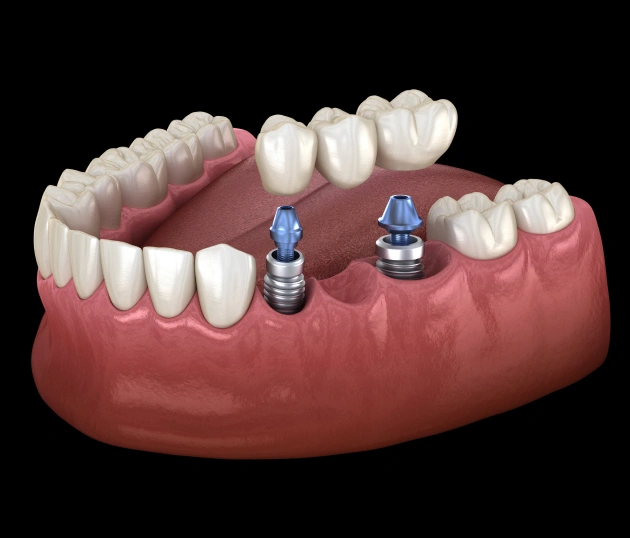
When comparing the differences between traditional dental implants and mini dental implants, it is important to note that neither of these options are implanted with the tooth attached. When the procedure is first completed, the titanium post is inserted under the gums and secured to the jawbone. The attaching of the visible tooth comes later after the process of osseointegration has completed. The process by which the tooth becomes attached, however, is different depending on the type of implant you get. A traditional dental implant typically requires a second metal piece called an abutment to be secured in place at the gum line. Once secure, the new tooth (crown) will be attached. With a mini dental implant, one step is removed from this equation. There is no need for an abutment because a mini implant has a small ball at the end of it. As a result, the new tooth can be secured without this third piece.
What They Are Made of
At Escondido Family Dental Care & Specialty Center, we place dental implants that are made of titanium. In our dental office, we understand how unique and valuable titanium is since it is the only metal that can be integrated into the body. As a result, the body will think that your new root (the titanium rod) is natural matter and will provide the same level of stability to it that the jawbone would to a natural tooth. At the same time, the implant will provide stimulation to the jawbone for a symbiotic relationship.
At Escondido Family Dental Care & Specialty Center, we will be happy to answer any questions that you have regarding the procedure and the two options available. Here are some of the frequently asked questions that we get asked.
Are There Any Differences Between Dental Implants and Mini Dental Implants Regarding How Long They Last?
Traditional dental implants placed in our dental office can last for a lifetime. Traditional dental implants are made of titanium, a material that will fuse with the jawbone to provide stability and security for the replacement tooth. With regular brushing, flossing, and bi-annual teeth cleanings, you can keep your natural teeth and your implants in excellent condition. At Escondido Family Dental Care & Specialty Center, we have also seen mini dental implants that have a long lifespan. However, additional research will be necessary to determine exactly how long they will last. In the meantime, we are confident that you will like the appearance of your new replacement tooth. To learn more, visit our dental office.
Are Dental Implants and Mini Dental Implants Used for Different Reasons?
Both can be used to replace missing teeth or to serve as anchors for a different prosthetic like dentures. They are natural looking and durable. To learn more, visit our dental office.
Check out what others are saying about our implant support services on
Yelp: The Difference Between Dental Implants and Mini Dental Implants Escondido

Are There Any Reasons That a Mini Dental Implant is Better Than a Traditional Implant?
We tend to recommend mini dental implants when the process of resorption begins to take place and the jawbone is not dense enough to support the implant. We also recommend mini dental implants for a temporary or faster solution since the process can be completed more quickly.
Will They Look Different?
Not at all. Once your new tooth (crown) is attached, a mini dental implant and traditional dental implant will look exactly the same. The differences between the two are in the size of the metal post that is implanted under the surface of the gums. The crown itself will be made using an impression of your mouth and measurements that were taken of your teeth in our dental office. That way, your new tooth will look completely natural and blend in with the surrounding teeth, regardless of the size of implant that you received.
If you are interested in learning more, we encourage you to call our Escondido, CA dental office at (760)-273-0531. At Escondido Family Dental Care & Specialty Center, we can also provide you with specific information that is related to your situation.
Questions Answered on This Page
Definition of Dental Implant Terminology
Abutment
Multiple replacement teeth that are fixed in place via attachment to dental implants, natural adjacent teeth, or a combination of the two.
Bridge
Multiple replacement teeth that are fixed in place via attachment to dental implants, natural adjacent teeth, or a combination of the two.
Dental Crown
A crown is an artificial tooth, usually consisting of porcelain, which covers the top of the implant to provide people with an aesthetically pleasing and fully-functional tooth.
Dental Implant
A dental implant is an artificial tooth root that is placed into your jaw to hold a replacement tooth or bridge. Dental implants may be an option for people who have lost a tooth or teeth due to periodontal disease, an injury, or some other reason.
Endosteal (endosseous)
Endosteal is a type of dental implant that a professional places in the alveolar and basal bone of the mandible that transcends only one cortical plate.
Eposteal (subperiosteal)
Eposteal is a type of dental implant that conforms to whichever edentulous surface of an alveolar bone is superior.
Implant-Supported Bridge
An implant-supported bridge is a dental bridge that professionals fix in place with the use of dental implants inserted in the jaw to create a sturdy set of artificial teeth.
Osseointegration
Osseointegration is the process in which a titanium dental implant fuses with the surrounding bone over several months after an oral health professional places the implant in the jaw.
Periodontal
Literally “around the tooth”
Resorption
Resorption is the process in which the body absorbs the calcium from the jaw since there are no tooth roots to cause the necessary stimulation and proceeds to use the calcium in other areas.
Transosteal (transosseous)
Transosteal is a type of dental implant that includes threaded posts which penetrate the superior and inferior cortical bone plates of the jaw.
Helpful Related Links
- American Dental Association (ADA). Glossary of Dental Terms. 2015
- American Academy of Cosmetic Dentistry® (AACD). Home Page. 2015
- WebMD. WebMD’s Oral Care Guide. 2015
About Our Business, License, and Website Security
- Escondido Family Dental Care & Specialty Center was established in 1994.
- We accept the following payment methods: American Express, Cash, Check, Discover, MasterCard, and Visa
- We serve patients from the following counties: San Diego County
- We serve patients from the following cities: Escondido, San Marcos, Poway, San Diego, Vista, Encinitas, Solana Beach, El Cajon, Del Mar, Oceanside, Carlsbad and Temecula
- Norton Safe Web. View Details
- Trend Micro Site Safety Center. View Details