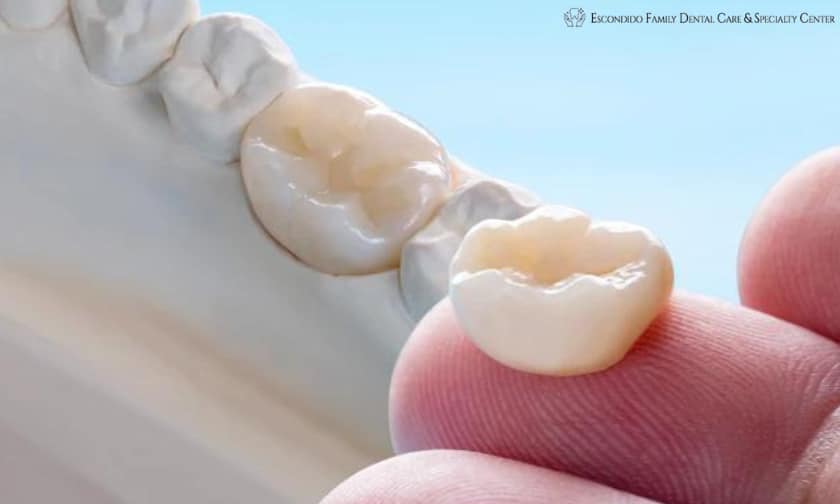
Dental crowns and bridges are two different but related treatments that can be used to improve the function and appearance of your teeth. Crowns, also known as caps, are placed over existing teeth to protect them from further damage or decay. Bridges are used to replace one or more missing teeth by filling the gap left behind. Crowns and bridges are made from a variety of materials, including porcelain, ceramic, metal, or a combination of these. Your dentist will recommend the best material for you based on your individual needs.
How Crowns Help to Address Dental Issues
Crowns are designed to fit over existing teeth, providing a sturdy layer of protection from further damage or decay. A crown can also be used to restore a tooth that has been severely damaged by trauma, fracture, or decay. Depending on the severity of the damage, the crown may be used to rebuild the entire tooth or just part of it. When a tooth is too weak to hold a filling, a crown can also be used as an alternative solution.
Crowns are made from various materials and your dentist will recommend the best option for you. Porcelain and ceramic crowns are excellent choices for restoring front teeth as they are more aesthetically pleasing and blend in well with natural teeth. Metal crowns, on the other hand, are best used for back molars as they provide maximum strength.
Pros and Cons of Crowns
Crowns offer several benefits, including:
Aesthetically pleasing results
Durability and strength
Protection against further damage or decay
Improved bite and chewing ability
However, there are also some drawbacks to consider, such as:
Costly treatment option
Time-consuming procedures.
When Is a Bridge Needed?
Bridges are a permanent solution for replacing one or more missing teeth. The bridge is composed of two crowns on either side of the gap, connected to an artificial tooth in between. This procedure is done by attaching the crowns directly to adjacent teeth, also known as abutment teeth, which act as anchors for the bridge. Bridges are often recommended when the gap between missing teeth is too wide to be filled with a dental implant, or if the adjacent teeth are not strong enough to support an implant. Bridges can also help with bite misalignment and speech impediments caused by missing teeth.
Conclusion:
Crowns and bridges are two effective treatments for restoring broken, decayed, and missing teeth. Crowns can be used to protect existing teeth from further damage or decay, while bridges are a permanent solution for replacing one or more missing teeth. When deciding which option is best for you, it’s important to weigh the pros and cons of each treatment. Your dentist can advise you on which option is most suitable for your individual dental needs.
FAQs:
Q1. How long do crowns and bridges last?
A1. Crowns and bridges usually last between five to fifteen years, depending on the quality of the material used, your oral hygiene habits, and your lifestyle.
Q2. Are crowns and bridges painful?
A2. While the placement of a crown or bridge may cause some minor discomfort, it should not be painful. Your dentist will ensure that you are comfortable throughout the procedure by providing local anesthesia if needed.
Q3. How much do crowns and bridges cost?
A3. The cost of a crown or bridge varies based on the material used, your geographic region, and other factors. Speak to your dentist for an accurate quote as treatment costs can also vary between practices.